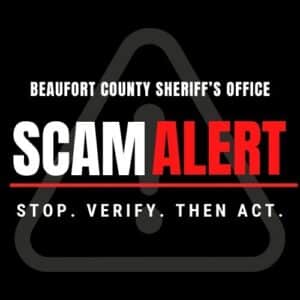
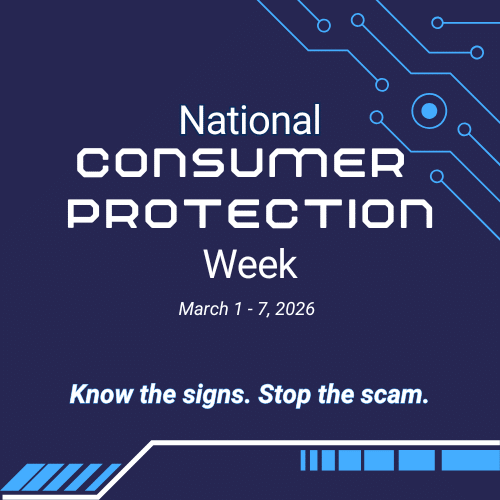
March 1-7, 2026, marks National Consumer Protection Week, a nationwide effort to raise awareness about fraud and help residents recognize and avoid scams.
Scammers continue to target victims through phone calls, text messages, and emails, often impersonating trusted organizations and creating a sense of urgency to steal money or personal information.
The public is encouraged to watch for four common warning signs.
They pretend to be someone you know.
Scammers frequently claim to represent legitimate agencies or businesses, including the Beaufort County Sheriff’s Office, the Federal Trade Commission, the Social Security Administration, the Internal Revenue Service, or Medicare. Others pose as utility companies, technology firms, or charities. Using caller ID “spoofing,” scammers can make phone numbers appear legitimate even when they are not.
They claim there’s a problem or a prize.
Fraudsters may say a victim owes money, has a compromised account, faces legal trouble, or has a family emergency. Others claim the victim won a lottery or sweepstakes but must pay a fee to collect the prize. Officials advise residents to slow down if the message is unexpected or creates panic.
They pressure you to act immediately.
Scammers often threaten arrest, lawsuits, license suspension, deportation, or account closure to rush victims into making quick decisions. Legitimate organizations typically provide time to verify claims and resolve issues.
They demand payment in a specific way.
Requests for cryptocurrency, wire transfers such as Western Union or MoneyGram, payment apps, or gift cards are major red flags. Some scammers send fake checks and instruct victims to deposit them and return a portion of the funds. Officials stress that legitimate businesses do not require payment through these methods.
To avoid scams, block unwanted calls and filter spam texts, avoid clicks on unsolicited links, independently verify contact information, and refuse to share personal or financial details in response to unexpected requests. Residents should also resist pressure to act immediately and never deposit a check and send money back to someone.
Anyone who suspects fraud should report it to their local law enforcement agency, the Federal Trade Commission at reportfraud.ftc.gov, and the Federal Bureau of Investigation’s Internet Crime Complaint Center at ic3.gov.
Staying informed and sharing scam prevention information with family, friends, and neighbors can help protect the community from financial loss.